Looney Tunes™ World of Mayhem
- 4.4
- Rating
- 10.00M
- Installs
- Free
- Price

 Analysis by App-foxy
I installed Looney Tunes™ World of Mayhem expecting a light cartoon distraction, but I found a role-playing game with more planning underneath its colorful presentation than the name first suggests. The basic appeal is easy to understand: collect familiar Looney Tunes characters and send them into battles. The more important question is whether you enjoy building a roster, improving individual characters, and making repeated decisions about which team fits each fight.
That distinction matters because this is not simply a short collection of cartoon mini-games. It is a character-collection RPG from Scopely, released on December 12, 2018, and still presented as a free game for players aged Everyone 10+. It has reached over 10 million installs and holds a 4.4 average from around 355 thousand ratings, so it clearly has a large audience. My experience suggests that its best audience is not every Looney Tunes fan, but fans who also like gradual progression and team-based combat.
How I Decided Whether It Was Worth Keeping
When I judge a game like this, I look beyond its characters. I want to know whether the battles reward thought, whether progress feels understandable, whether the daily routine remains enjoyable, and whether spending money is necessary to have a satisfying experience. I also ask how much time the game expects from me. A free role-playing game can be excellent for short sessions, yet frustrating if it constantly pushes me toward longer checklists or purchases.
You May Also Like

 Blood Strike: 2.5 Anniversary
Blood Strike’s Loadouts Turn Every Drop Into a Tactical Gamble
A close look at Blood Strike’s custom loadouts: how fast access to signature weapons reshapes its battle royale rhythm, rewards preparation, and narrows the gap between fights.

 Pandora - Music & Podcasts
Pandora’s Music Is Easy to Start, but Harder to Recover
Pandora’s strength is its low-effort path from a seed to a station. Its weak spot is how much confidence it asks you to place in connection, setup, and quiet recovery.

 8 Ball Pool
 Is Built on Rivalries, Rematches, and Routine
A close look at the rivalries, rematches, shared routines, and unanswered safety questions that turn a quick pool match into a persistent mobile community.

 Samsung Music
’s Quiet Strength Is Playing What You Already Own
Its reach comes less from spectacle than from dependable access to a personal library. That simplicity is both the app’s strongest retention engine and its ceiling.

 AccuWeather: Weather Radar
AccuWeather Review: A Quick, Clear Forecast for Everyday Decisions
For everyday plans, the best forecast is the one you can understand quickly. AccuWeather makes rain timing, radar, and local conditions easy to act on, with a few trade-offs.

 Hill Climb Racing
Why Hill Climb Racing Still Turns Crashes Into One More Run
A tiny car, a bumpy hill and one more upgrade: Hill Climb Racing keeps resurfacing because its simple chaos makes every near-miss feel personal.
More From Our News Desk
View All News


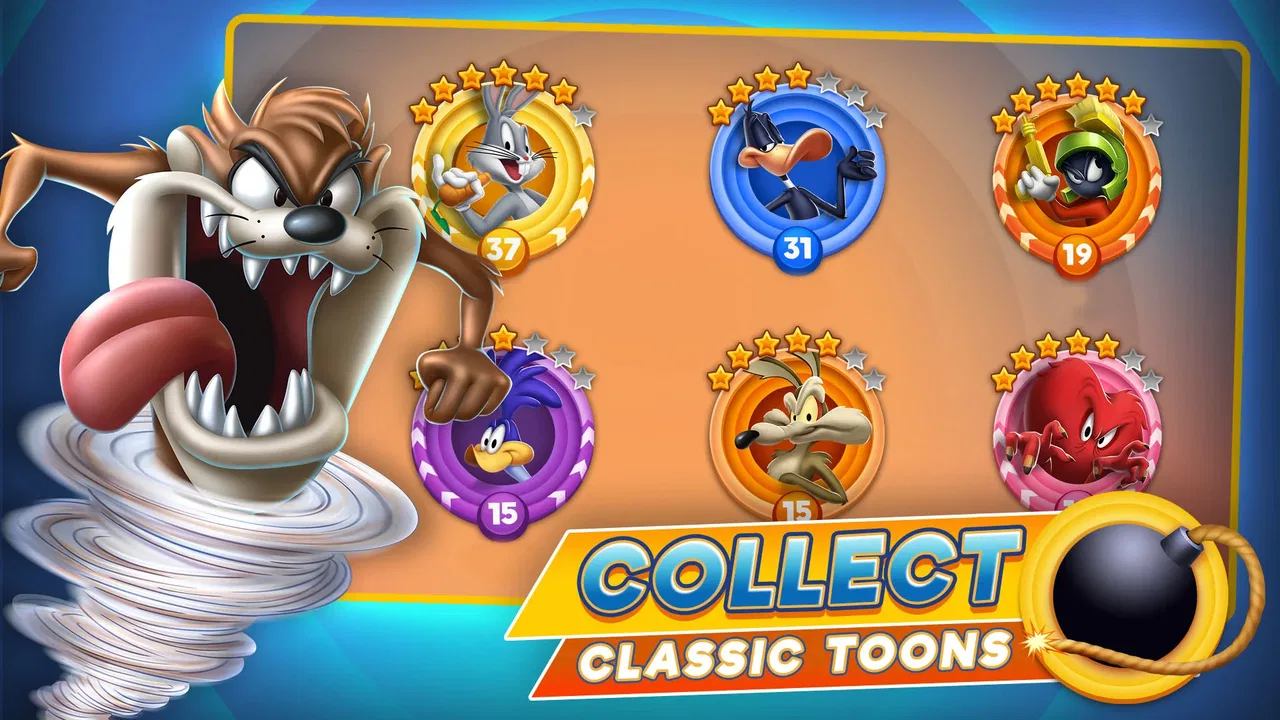
World of Mayhem makes its strongest first impression through personality. The animation style, character reactions, and familiar cast give ordinary menus and battles more charm than a generic fantasy RPG would have. Collecting a recognizable character feels different from collecting an anonymous warrior because I already have an idea of that character’s attitude. That makes roster growth more personal, even when the underlying progression is built around familiar role-playing conventions.
The central loop is straightforward enough to learn quickly. I select a group, enter a fight, choose actions, and work toward improving the characters I use. The interesting part is not the first battle; it is deciding which characters deserve attention when resources are limited. A broad roster can tempt you to upgrade everyone, but spreading progress too thin makes later challenges feel harder than they need to be.
My practical advice is to choose a small working group early and treat new characters as future projects rather than immediate replacements. That approach keeps the game manageable. It also prevents the common mistake of spending every improvement resource as soon as it appears. Before upgrading someone, I consider whether that character fills a useful role, complements the rest of the team, or is simply attractive because the cartoon is familiar.
What the battles ask from you
The combat is approachable, but it is not completely mindless. Team selection often matters before the first move, and the order in which I use abilities can change the result of a close encounter. I pay attention to which opponent is most dangerous, whether removing one enemy quickly is better than weakening several, and whether a defensive action is more valuable than another attack.
That creates a useful difference between this game and a purely casual cartoon title. I can play a quick battle while waiting for something, but difficult encounters reward preparation. If a team repeatedly loses, the solution is not always to tap faster. Sometimes I need to improve the right character, change the lineup, or stop using a favorite who does not fit the situation.
One of the less obvious strengths is that the recognizable cast makes experimentation easier to remember. I am more likely to remember why a particular combination worked when the team is made up of characters with distinct personalities. That does not remove the need to learn the game’s systems, but it gives the planning a more enjoyable surface.
Progression is satisfying when it stays focused
The progression structure gives me several reasons to return. There is the immediate goal of winning a battle, the medium-term goal of strengthening a team, and the longer-term goal of expanding the collection. Those layers can work well together, especially for players who enjoy seeing a modest roster become more capable over time.
The trade-off is that collection games can turn improvement into a waiting exercise if I chase too many goals at once. I get better results by choosing a clear priority: advance through the current content, strengthen a preferred team, or collect particular characters. Trying to do all three with equal attention makes the game feel busier and less rewarding.
I also recommend treating the roster as a set of projects rather than a checklist. A new character may be exciting, but excitement alone is not a reason to abandon a team that already works. I found the game more enjoyable when I asked, “What problem will this character solve?” instead of only asking whether I wanted to add another name to the collection.
Why the Looney Tunes theme genuinely helps
The cartoon license is not just decoration. It changes the tone of progression and makes failure easier to tolerate. Losing a battle involving these characters feels less severe than losing in a darker, more serious RPG. The humor gives the game a relaxed identity, while the role-playing structure provides enough depth for players who want more than a few minutes of novelty.
That combination is particularly useful for families or friends looking for a recognizable game to discuss. A player can enjoy the characters casually, while another can focus on team building. The Everyone 10+ rating also makes the presentation approachable, although I would still judge suitability by the individual child’s comfort with combat and in-app purchasing rather than by the age label alone.
For me, the theme works best during short breaks. I can play a few battles, make one roster decision, and stop without feeling that I must complete a long story chapter. At the same time, the game offers enough ongoing development to support longer sessions when I am in the mood to plan.
Where It Wins, Where Other Games Fit Better, and What Switching Costs
I find the real dividing line is whether you enjoy maintaining a roster, not simply whether you like the characters. Compared with a straightforward arcade game, this asks for more patience and planning; compared with a larger, exploration-focused RPG, it offers a lighter commitment. If you stay, a dependable core team makes the routine easier to sustain, which is where the month-to-month value becomes clear.
The situations where this game is the better choice
I would choose World of Mayhem over a more generic role-playing game when character recognition and a lighter mood are important. The Looney Tunes cast gives the collection process an immediate emotional hook. I do not need to learn an entirely new fantasy world before I can appreciate the personalities on screen.
It is also a strong fit for players who like a middle ground between casual play and strategy. The controls are not intimidating, but the roster and battle decisions give me reasons to think. Someone who enjoys improving a team over several sessions may find more staying power here than in a simple arcade game.
Another advantage is its flexibility of attention. I can approach it as a quick character game, or I can spend more time comparing teams and deciding where improvements matter most. That makes it easier to fit around a normal day than a game that demands one uninterrupted session to feel meaningful.
A realistic everyday use case is a short commute or a break between tasks. I might open the game with one goal in mind, such as testing a different lineup or using available improvements on a priority character. The best habit is to decide that goal before starting. Without one, it is easy to bounce between collection, upgrades, and battles without making meaningful progress.
When a different category may suit you better
I would not recommend this as the first choice for someone seeking a fast action game with direct movement and constant reflex challenges. Its appeal comes from selecting teams and actions, not from controlling a character through an expansive real-time world. A player who wants immediate physical skill may find the battles too measured.
It may also be a poor fit if you dislike collection systems. Even with a familiar cast, the long-term structure asks you to care about acquiring and developing multiple characters. If you prefer one hero, one campaign, and a clear ending, a traditional single-player RPG may be more satisfying.
Players who want a completely predictable free experience should approach carefully. The game is free to download, but in-app purchases range from $0.99 to $399.99 per item. That does not automatically make spending necessary, but it does mean I would disable purchase options or set a firm personal budget before handing the device to a child. The visible presence of expensive purchase tiers is one of the main reasons I would not describe the game as an uncomplicated recommendation for every family.
There is also a difference between liking Looney Tunes and liking this particular format. A fan who only wants a relaxed cartoon experience may prefer a simpler game with fewer upgrade decisions. The license can attract someone initially, but it cannot remove the patience required by roster development.
The hidden cost of changing your approach
The cost of switching is not just money. It is also the time spent learning which characters to improve and rebuilding a routine around another game. In World of Mayhem, early decisions can shape how comfortable progression feels, so changing teams repeatedly may leave me with several underdeveloped characters instead of one dependable group.
That is why I suggest experimenting in a controlled way. Keep a reliable core, then use one or two spaces for testing. This preserves progress while allowing me to learn what different characters contribute. It is a more efficient approach than replacing the entire lineup whenever a new character appears.
I also avoid treating every reward as an instruction to upgrade immediately. Saving resources until I understand my next obstacle gives me more flexibility. This is especially helpful for free players, because careful allocation reduces the temptation to solve every setback through an impulsive purchase.
The current version is 64.0.0, and the game supports devices running Android 7.0 or later. Those details matter if you are installing it on an older phone or tablet. More broadly, I would leave enough storage and battery headroom for a game that combines animated presentation with ongoing progression, rather than assuming any older device will provide the same smooth experience.
Questions I would answer before recommending it
Is it genuinely free to start? Yes. The game is listed as free, so I can begin without paying for the download. The important qualification is the range of optional purchases. I would play the opening stretch without spending, decide whether the battle loop itself is enjoyable, and only then consider whether any purchase fits my budget.
Can a casual player enjoy it? Yes, provided “casual” means playing in short sessions and accepting gradual progress. I do not need to master every system immediately. However, a casual player who expects to unlock everything quickly may become frustrated. The game rewards consistency more than occasional bursts of impatient spending.
Is it suitable for children? The content rating is Everyone 10+, which makes the presentation broadly approachable. I would still supervise purchases and explain that collecting characters does not mean every available offer is necessary. The cartoon style is friendly, but the progression and purchase structure deserve the same attention as the combat.
Will Looney Tunes fans automatically enjoy it? Not automatically. The strongest match is a fan who also likes team building, repeated battles, and improving a collection. If the main attraction is watching the characters perform without managing a roster, the role-playing systems may feel like extra work.
Does it replace a full role-playing adventure? Not for me. It offers a collection-focused loop rather than the same experience as a long, exploration-heavy RPG. I see it as a lighter, more repeatable alternative for players who enjoy assembling teams, not as a substitute for every kind of role-playing game.
My recommendation after playing
I recommend World of Mayhem to players who want familiar cartoon characters wrapped in a structured team RPG. The combination is specific and effective: the cast makes collecting approachable, while the combat gives the collection a purpose. Scopely has built a game that can be enjoyed in short bursts but still offers meaningful decisions for anyone willing to plan beyond the next battle.
I would start slowly. Build a dependable core team, save improvements until you understand what each character contributes, and judge new additions by function rather than popularity. Those habits make the free experience feel more controlled and reduce the pressure to spend when progress slows.
I would skip it if you dislike repeated progression, prefer direct action, or want a one-time purchase with no purchase prompts. I would also be cautious about recommending it to children without purchase controls. The free entry is inviting, but the optional item range means the game works best when the player, or the supervising adult, sets clear boundaries.
For the right person, this is more than a cartoon-themed novelty. It is a friendly, accessible way to enjoy roster planning without entering an intimidating fantasy world. My clear recommendation is to try it free, keep your early team focused, and continue only if the decisions between battles are as enjoyable to you as the characters themselves.
FAQs for Looney Tunes™ World of Mayhem
01What is Looney Tunes™ World of Mayhem?
Looney Tunes™ World of Mayhem is a vibrant, action-packed RPG game for both Android and iOS. It allows players to collect and battle with iconic Looney Tunes characters. The game combines strategy, humor, and nostalgia, offering a unique experience where you build teams of your favorite cartoons and engage in hilarious battles.
02Is Looney Tunes™ World of Mayhem free to play?
Yes, the game is free to download and play on both Android and iOS platforms. However, it does contain in-app purchases. These purchases range from character packs to in-game currency, which can enhance your gameplay but are not necessary to enjoy the full experience of the game.
03What are the main features of the game?
Looney Tunes™ World of Mayhem features a wide roster of characters, each with unique abilities. Players can engage in turn-based battles, build teams, and explore different environments inspired by the classic cartoons. The game also includes a PvP mode, allowing players to compete against others globally to climb the leaderboards.
04Do I need an internet connection to play?
Yes, an internet connection is required to play Looney Tunes™ World of Mayhem. The game regularly updates with new events, characters, and challenges that necessitate being online. Additionally, certain features like PvP battles and leaderboards depend on active internet connectivity.
05How often does the game receive updates?
Looney Tunes™ World of Mayhem receives regular updates that introduce new characters, events, and gameplay enhancements. These updates help keep the game fresh and engaging, often aligning with holidays or special events. Players can expect frequent content additions, ensuring a dynamic and evolving gaming experience.
Pros
- Vibrant
- engaging cartoon graphics.
- Wide variety of iconic characters.
- Strategic combat keeps gameplay fresh.
- Frequent updates with new content.
- Fun
- humorous storyline and quests.
Cons
- Requires stable internet connection.
- In-app purchases can be expensive.
- Energy system limits play time.
- Some characters are hard to unlock.
- Occasional crashes on older devices.

Looney Tunes™ World of Mayhem
Gallery